The paper examines the role of public libraries in Croatia within the framework of sustainable development through two complementary dimensions: internal (reactive) sustainability, referring to institutional operations, and external (proactive) sustainability, referring to their broader societal role. The study is based on a mixed-methods approach, including a survey conducted among 99 public libraries.
The findings show that Croatian public libraries implement sustainability practices to some extent, but mostly in an unsystematic manner and without a clear strategic framework. Social sustainability is the most developed dimension, particularly through inclusion programmes, lifelong learning, and access to knowledge, while economic sustainability remains the least developed. The paper highlights libraries as key actors in local sustainable development and introduces an integrated conceptual framework that, for the first time in the Croatian context, systematically distinguishes between internal and external dimensions of sustainability.
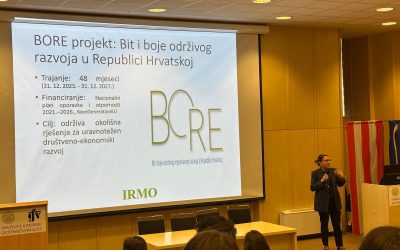
The research was conducted within the framework of the Center for Sustainable Development through Culture as part of the project The Essence and Colors of Sustainable Regional Development in the Republic of Croatia. Full paper is available at: https://doi.org/10.30754/vbh.69.1.1820