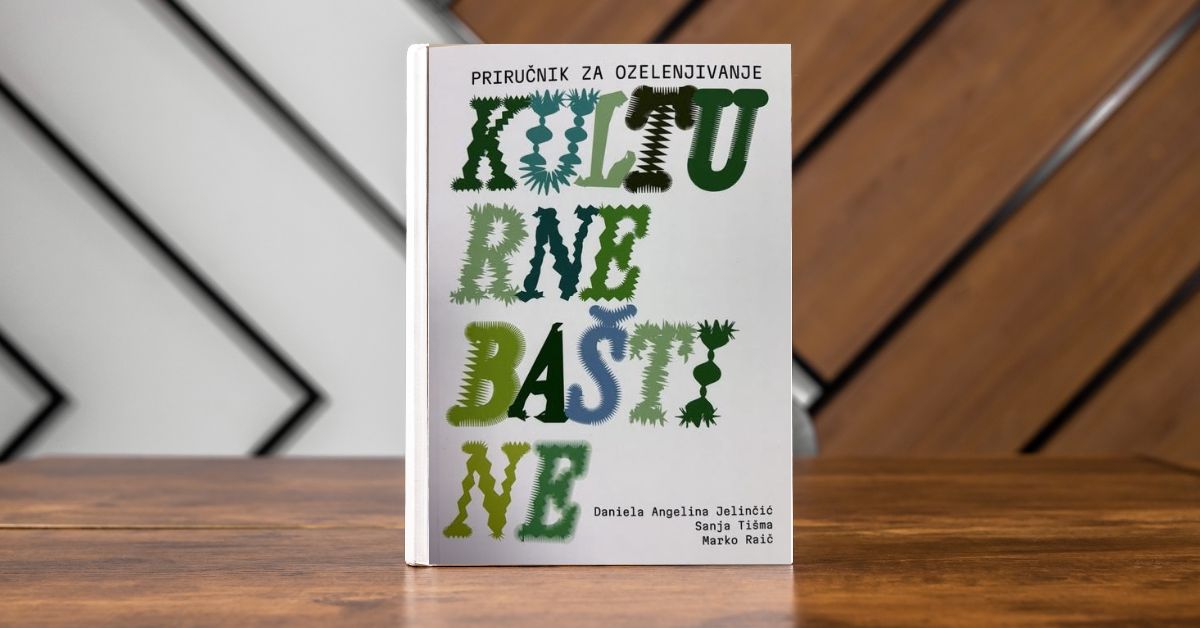
The new “Guidebook for Greening Cultural Heritage” authored by IRMO researchers Daniela Angelina Jelinčić, Sanja Tišma and Marko Raič has been published by Jesenski and Turk. The guidebook is the result of the research performed by the Center for Sustainable Development through Culture within the framework of the BORE project and published as the 4th book in the series “Cultural Heritage in Practice” (the first book was ” Cultural Sustainability Guide”, 2022, the second “Comprehensive Assessment of the Impacts of Interventions in the Field of Cultural Heritage”, 2023, and the third “Guidebook for Participatory Planning and Management of Cultural Heritage”, 2024). Its goal is to provide inspiration for action so that cultural heritage is recognized not only as a remnant from the past, but also as an active resource in facing the challenges of climate change and shaping a more resilient future. It provides practical information on possible ways of greening cultural heritage, both tangible and intangible, with inspiring practical examples, through its reactive, but also proactive role: reactive refers to activities to preserve and ensure the sustainability of cultural assets themselves in response to the negative impacts of climate change (heritage as an object) while proactive implies activities and initiatives by which cultural heritage contributes to preventing and reducing the consequences of climate change (heritage as a subject).
The guidebook first introduces the initial concepts related to greening cultural heritage, or green cultural heritage. It then presents international, European and national policies related to the interrelationship between cultural heritage, the environment and climate change, and in the central part presents examples of good practice in greening cultural heritage through three thematic areas: monitoring and mitigating the effects of climate change on cultural heritage itself; shaping ecological behavior through cultural heritage; and the concept of green heritage, which implies heritage associated with plants and the plant environment. This is followed by a chapter on cultural ecosystem services and green infrastructure, followed by practical steps to be taken for success in one’s own projects. Finally, the main challenges of greening cultural heritage are described, indicating the direction of future research and concrete activities.
It is intended for everyone involved in cultural heritage, environment and sustainable development: experts in the field of heritage protection and management, conservation specialists, urban planners, decision-makers, cultural workers, architects, researchers, academics as well as representatives of civil society and everyone interested in the link between cultural heritage and climate change. It is particularly useful for those working on climate change adaptation projects, green infrastructure development and public policy development.
The guidebook can be obtained here: https://www.jesenski-turk.hr/hr/prirucnik-za-ozelenjavanje-kulturne-bastine